Why AI-Enabled DevOps Engineer Masters Program is an Absolute Necessity for Building a DevOps Career in 2026
The technological landscape of 2026 presents a dramatically different reality from what DevOps professionals encountered just a few years ago. The exponential acceleration of artificial intelligence integration across the software development lifecycle has fundamentally transformed the role of AI enabled DevOps engineers, creating an undeniable imperative for specialized education that bridges traditional operational excellence with cutting-edge AI capabilities. As organizations scramble to maintain competitive advantage in an increasingly automated world, the question is no longer whether to embrace AI-powered DevOps practices, but how to acquire the comprehensive skill set required to lead this transformation effectively.
The Evolving DevOps Landscape in 2026
The traditional DevOps model, which emphasized collaboration between development and operations teams through CI/CD pipelines, infrastructure as code, and automated testing, has reached its evolutionary limit. Today’s enterprise environments demand predictive analytics, self-healing systems, and intelligent automation that can anticipate failures before they occur and optimize resource allocation in real-time. The integration of AI into DevOps practices has given rise to what industry experts now recognize as the natural progression of the discipline—a sophisticated ecosystem where machine learning algorithms continuously analyze system telemetry, user behavior patterns, and deployment metrics to make autonomous decisions that were previously the sole domain of human engineers.
This transformation has created a significant skills gap in the workforce. Traditional DevOps training programs, while providing foundational knowledge, simply cannot keep pace with the rapid advancement of AI technologies. The modern DevOps engineer must possess expertise in machine learning operations, or MLOps, understand how to implement AI-driven monitoring solutions, and develop the ability to work alongside AI assistants that augment rather than replace human decision-making capabilities. The demand for professionals who can navigate this complex intersection of disciplines has never been higher, with organizations actively seeking talent that can bridge the gap between traditional infrastructure management and intelligent automation.
Understanding the AI enabled DevOps Masters Program Structure
The AI-Enabled DevOps Engineer Masters Program represents a comprehensive educational framework designed specifically for the challenges of the 2026 technology landscape. Unlike conventional training programs that focus solely on individual tools or platforms, this master’s level curriculum provides a holistic understanding of how artificial intelligence permeates every aspect of the DevOps lifecycle. Participants gain deep insights into how machine learning algorithms can transform continuous integration processes, automate deployment strategies, and enhance monitoring capabilities beyond traditional threshold-based alerting systems.
The program architecture typically encompasses several critical domains that collectively prepare professionals for the multifaceted demands of modern DevOps roles. Foundational modules establish a robust understanding of core DevOps principles while simultaneously introducing AI concepts that will be applied throughout the course. Advanced modules delve into specific applications of AI in areas such as predictive analytics for infrastructure management, intelligent anomaly detection, and automated incident response systems. The curriculum carefully balances theoretical knowledge with practical application, ensuring that participants can immediately implement their learning in real-world scenarios.
Top AI-Enabled DevOps Classroom and ILT Training in Kolkata: The AEM Institute Advantage
For working professionals in Kolkata and the surrounding region, the AEM Institute has emerged as a premier destination for acquiring AI-enabled DevOps expertise. The institution’s classroom and instructor-led training programs have been specifically designed to accommodate the unique needs of working professionals who must balance career advancement with existing job responsibilities. The institute has gained recognition for its comprehensive approach to DevOps education, integrating cutting-edge AI technologies with proven pedagogical methods that ensure deep understanding and practical competency.
The AEM Institute’s training programs distinguish themselves through several key features that address the specific challenges faced by working professionals. The classroom environment fosters collaborative learning experiences where participants can engage with both instructors and peers, sharing real-world challenges and solutions that enhance the overall learning experience. The instructor-led training component ensures that participants receive personalized guidance and support, with expert faculty members who possess extensive industry experience in implementing AI-enabled DevOps solutions across various sectors.
The institute’s curriculum has been meticulously crafted to reflect the current demands of the industry while anticipating future trends in DevOps and AI integration. Participants gain hands-on experience with emerging technologies and methodologies that are shaping the future of software delivery and infrastructure management. The program’s emphasis on practical application ensures that working professionals can immediately translate their learning into tangible improvements in their current roles, making the investment in education immediately valuable to both individuals and their organizations.
The Technical Components of Modern AI-Enabled DevOps
Understanding the technical architecture of AI-enabled DevOps systems is essential for any professional seeking to build a career in this space. The modern DevOps engineer must comprehend how AI agents can analyze vast amounts of operational data to identify patterns and anomalies that would be impossible for human operators to detect manually. These intelligent systems can predict potential system failures before they occur, automatically scaling resources to meet anticipated demand and adjusting deployment strategies based on historical performance data.
Machine learning models integrated into CI/CD pipelines can analyze code quality, predict deployment success rates, and recommend optimization strategies that reduce technical debt while improving system reliability. Natural language processing capabilities enable AI assistants to interpret and act upon human instructions, creating a more intuitive interface for infrastructure management. The integration of these AI capabilities requires DevOps engineers to understand not only how to implement and manage these systems but also how to train and refine the AI models that drive them.
Infrastructure automation has evolved significantly with the integration of AI capabilities. Traditional infrastructure as code practices are now augmented by intelligent systems that can automatically generate and optimize infrastructure configurations based on specific application requirements and performance objectives. AI-enabled monitoring solutions go beyond simple threshold alerts to understand the complex relationships between different system components, enabling more accurate diagnosis of issues and more effective incident response.
The Pedagogical Approach for Working Professionals
The pedagogical approach employed by leading institutions like the AEM Institute recognizes the unique challenges faced by working professionals pursuing advanced technical education. The curriculum structure accommodates the demanding schedules of employed individuals while maintaining academic rigor and practical relevance. Modular learning paths allow participants to progress at their own pace, with flexible scheduling options that minimize disruption to professional responsibilities.
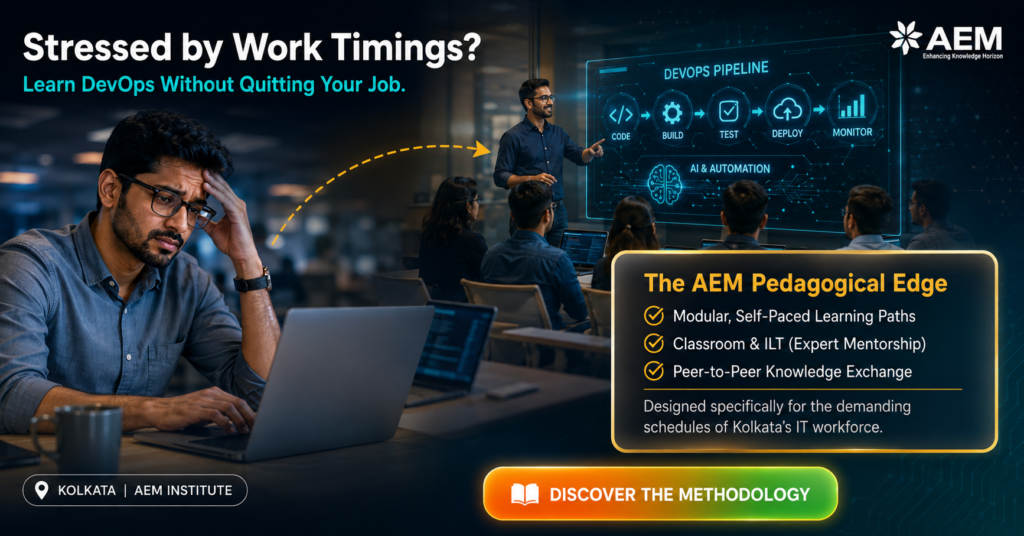
The classroom and instructor-led training format provides significant advantages over purely online learning models, particularly for complex technical subjects. Direct interaction with expert instructors enables immediate clarification of challenging concepts, while peer-to-peer learning opportunities enrich the educational experience through shared insights and diverse perspectives. The structured learning environment helps maintain motivation and ensures consistent progress through the comprehensive curriculum.
Career Advantages of AI-Enabled DevOps Certification
The career implications of completing an AI-enabled DevOps masters program are substantial and multifaceted. Certified professionals command significantly greater earning potential and career advancement opportunities compared to their non-certified peers. Organizations increasingly prioritize candidates with formal training in AI-enabled DevOps practices, recognizing that these individuals possess the skills necessary to drive digital transformation initiatives and maintain competitive advantage.
The certification serves as a demonstrable indicator of professional competency that differentiates candidates in an increasingly competitive job market. Employers value the comprehensive understanding that certification represents, encompassing both technical skills and strategic thinking capabilities. Certified professionals are better positioned to assume leadership roles within their organizations, guiding teams through the implementation of AI-enabled practices and driving innovation throughout the software delivery lifecycle.
The Future-Proofing Aspect of Advanced DevOps Education
The rapid pace of technological change makes continuous education essential for maintaining professional relevance. An AI-enabled DevOps masters program provides not only immediate skill enhancement but also the foundational knowledge necessary to adapt to future technological developments. Participants develop critical thinking skills and learning frameworks that enable them to quickly master new tools and methodologies as they emerge.
The program’s emphasis on understanding underlying principles rather than just specific tool implementations ensures that graduates can apply their knowledge across different platforms and technologies. This adaptability is crucial in a field where specific tools and platforms may change frequently, while fundamental concepts remain consistent. Professionals who understand the core principles of AI-enabled DevOps are better equipped to evaluate and implement new technologies as they become available.
Practical Applications in Real-World Scenarios
The practical applications of AI enabled DevOps skills extend across numerous industries and organizational contexts. Financial services organizations leverage these capabilities to ensure the reliability and security of transaction processing systems. Healthcare institutions implement AI-enabled DevOps to maintain the integrity of patient data systems while ensuring compliance with regulatory requirements. E-commerce platforms use these practices to optimize customer experiences and maintain operational continuity during high-traffic periods.
Real-world implementation of AI enabled DevOps practices often involves the integration of multiple AI systems working in concert to achieve operational objectives. Machine learning models might analyze system performance data to optimize resource allocation, while natural language processing systems interpret user feedback to identify areas requiring attention. The ability to orchestrate these various AI components requires a sophisticated understanding of both the technical and organizational aspects of DevOps practice.
Conclusion: Building a Sustainable DevOps Career in 2026
The evidence overwhelmingly supports the necessity of advanced education for building a sustainable DevOps career in 2026 and beyond. The integration of AI into DevOps practices has created a new professional paradigm that demands sophisticated skills and comprehensive knowledge. Working professionals who invest in AI-enabled DevOps education through programs such as those offered by the AEM Institute position themselves for long-term career success while contributing meaningfully to their organizations’ technological advancement.
The classroom and instructor-led training approach provided by the AEM Institute in Kolkata offers working professionals an accessible pathway to acquiring these AI enabled DevOps skills. The combination of expert instruction, practical application, and collaborative learning environments ensures that participants develop both the technical competence and strategic perspective required to excel in modern DevOps roles. As organizations continue to embrace AI-driven operational practices, the value of professionals with this specialized training will only increase, making this investment in professional development an essential component of career strategy for aspiring and practicing DevOps engineers alike.

AI, Cybersecurity & Agentic AI Consultant
AI & Cybersecurity Consultant | Agentic AI & AI Strategy | Responsible AI & AI Ethics | AI Governance | AI Security | Trusted Autonomous Business Solutions | Technology Mentor
With 23+ years of experience in cybersecurity and a growing focus on Artificial Intelligence, Responsible AI, and Agentic AI, I help organizations navigate the intersection of technology, business innovation, security, ethics, and risk.
My consulting focus is evolving from securing infrastructure to helping organizations securely and responsibly adopt AI as a business capability.
I advise organizations on designing and implementing AI-powered and agentic business solutions that can reason, orchestrate workflows, interact with enterprise systems, and execute tasks with appropriate levels of autonomy—while maintaining security, governance, transparency, accountability, and human oversight.
AI Strategy, Ethics & Governance
I help organizations establish practical frameworks for Responsible AI and AI Ethics, addressing questions that go beyond technical performance:
How should AI systems make decisions—and when should humans remain in control?
How do we ensure fairness, transparency, explainability, and accountability?
How do we protect sensitive data and intellectual property when using AI?
How do we manage AI hallucination, model risk, bias, and unintended outcomes?
How do we govern autonomous AI agents operating across enterprise systems?
How do we establish AI policies, controls, risk assessments, and governance models that enable innovation rather than restrict it?
My approach connects AI Ethics, AI Governance, Cybersecurity, Privacy, Risk Management, and Business Strategy into a unified Responsible AI framework.
Agentic AI & Business Transformation
A major area of my consulting interest is Agentic AI—moving beyond conversational AI toward intelligent systems capable of planning, reasoning, collaborating, using tools, and executing multi-step business processes.
I help organizations explore and architect agentic solutions for areas such as:
AI-powered Security Operations and Autonomous SOC
Intelligent incident investigation and response
Enterprise knowledge and decision-support systems
AI-driven IT operations and automation
Customer service and intelligent service orchestration
Business process automation
Risk, compliance, and audit intelligence
Cyber threat intelligence and autonomous analysis
AI-powered enterprise assistants and multi-agent systems
Security and compliance agents integrated into DevSecOps
AI agents for operational and executive decision support
The emphasis is not simply on deploying an AI agent, but on designing an enterprise-grade agentic architecture with the right balance of autonomy, human-in-the-loop controls, security, observability, governance, and measurable business value.
AI Security & Cybersecurity
My cybersecurity background provides the foundation for approaching AI from an adversarial and risk perspective.
I focus on securing the AI lifecycle and AI-enabled enterprise, including:
AI Security → Model Security → Data Security → Agent Security → Identity → Tool/API Security → Runtime Protection → Monitoring → Governance
This includes emerging areas such as AI threat modeling, adversarial AI/ML, prompt injection, model abuse, AI supply-chain risk, agentic AI security, identity and access management for AI agents, and AI-assisted security operations.
Cloud, DevSecOps & AI Engineering
My experience across AWS, Azure, GCP, Kubernetes, IAM, Linux/Windows security, Terraform, GitLab CI/CD, OPA, Checkov, SIEM, digital forensics, and security automation allows me to connect AI initiatives with the underlying enterprise technology ecosystem.
I help bridge the gap between:
Business Strategy ↔ AI Strategy ↔ Agentic AI ↔ Cybersecurity ↔ Governance ↔ Cloud ↔ DevSecOps
My Consulting Mission
I believe the next generation of enterprise transformation will not be defined simply by adopting AI—it will be defined by how responsibly, securely, ethically, and intelligently organizations operationalize AI.
My mission is to help organizations move from:
AI Experimentation → AI Adoption → AI Governance → Agentic AI → Responsible Autonomous Business
while ensuring that human values, business objectives, security, and accountability remain at the center of intelligent automation.
I help organizations turn AI from an emerging technology into a trusted, governed, and business-driven capability.
AI Strategy | Responsible AI | AI Ethics | AI Governance | Agentic AI | AI Security | Cybersecurity Transformation | Cloud & DevSecOps